Antony Armstrong-Jones: The Powerful Story of Britain’s Visionary Photographer and Royal Insider

Introduction
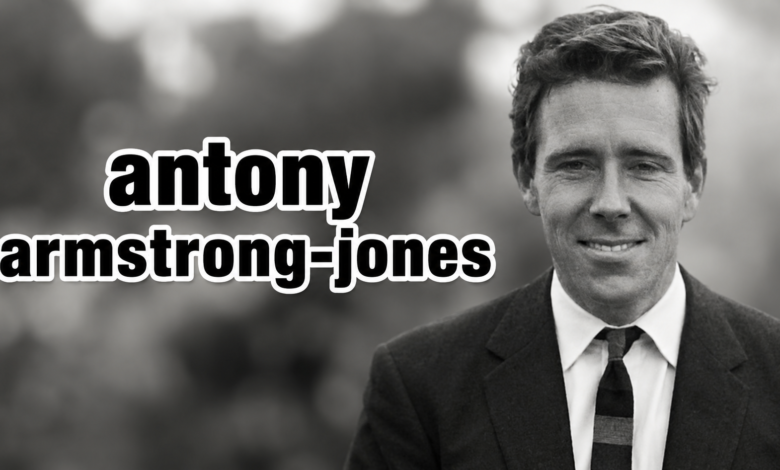
Antony Armstrong-Jones was a British photographer, filmmaker, designer, and member of the aristocracy who became internationally known after marrying Princess Margaret, the younger sister of Queen Elizabeth II. Later titled the 1st Earl of Snowdon, he built a respected creative career that existed independently of his royal connections. His portraits of actors, artists, politicians, writers, and members of the Royal Family made him one of the most influential British photographers of the twentieth century.
His life contained both remarkable achievements and difficult personal experiences. He survived polio as a teenager, became a successful portrait photographer, contributed to major design projects, and supported people with disabilities. However, his turbulent marriage, extramarital relationships, and complicated family life often attracted negative public attention. Despite these controversies, Antony Armstrong-Jones left a significant legacy in photography, design, and disability advocacy.
Quick Bio
| Category | Verified Information |
|---|---|
| Full Name | Antony Charles Robert Armstrong-Jones |
| Popular Name | Antony Armstrong-Jones |
| Title | 1st Earl of Snowdon |
| Date of Birth | 7 March 1930 |
| Birthplace | Belgravia, London, England |
| Date of Death | 13 January 2017 |
| Age at Death | 86 years |
| Nationality | British |
| Profession | Photographer, filmmaker, and designer |
| Father | Ronald Armstrong-Jones |
| Mother | Anne Messel |
| First Wife | Princess Margaret |
| Second Wife | Lucy Lindsay-Hogg |
| Education | Jesus College, Cambridge |
| Famous For | Portrait photography and marriage to Princess Margaret |
Early Life and Family Background
Antony Charles Robert Armstrong-Jones was born on 7 March 1930 in Belgravia, London. He was the son of Ronald Armstrong-Jones, a barrister, and Anne Messel, who later became the Countess of Rosse. His parents separated when he was young, and he grew up within a socially prominent and artistically connected family.
His maternal uncle, Oliver Messel, was a successful theatre and production designer. This creative family environment influenced Armstrong-Jones’s interest in photography, architecture, design, and the visual arts. Although he came from a privileged background, his childhood was not free from emotional and physical challenges.
His Experience With Polio
At the age of 16, Antony Armstrong-Jones contracted polio and spent several months receiving hospital treatment. The disease left him with lasting physical effects, including a limp. This painful experience later shaped his interest in disability rights and accessibility.
Rather than allowing the condition to prevent him from building a career, he developed an independent and determined personality. His experience also helped him understand the social barriers faced by people with disabilities, an issue he continued to address throughout his public life.
Education
Antony Armstrong-Jones attended Sandroyd School before continuing his education at Eton College. He later studied architecture at Jesus College, Cambridge. Although he did not complete his degree, his architectural education strengthened his understanding of design, structure, composition, and space.
While at Cambridge, he participated in rowing and worked as a coxswain. However, photography gradually became his main professional interest. His move away from architecture was not a failure but a turning point that led him towards a highly successful creative career.
Start of His Photography Career
After leaving Cambridge, Armstrong-Jones began working with Baron, a well-known society photographer. This early professional training taught him the technical and artistic skills required to photograph prominent public figures.
He later established his own studio and began taking theatrical, fashion, society, and portrait photographs. His work appeared in major publications, and his reputation grew rapidly during the 1950s. Unlike photographers who created overly formal pictures, Armstrong-Jones often presented his subjects in relaxed and natural environments.
Complete Career Overview
Portrait Photography
Antony Armstrong-Jones became famous for creating portraits that revealed the personality of the individual rather than simply presenting their public image. His photographs often appeared informal, intimate, and emotionally expressive.
He photographed members of the British Royal Family as well as actors, musicians, politicians, writers, and cultural personalities. His subjects included Queen Elizabeth II, Prince Philip, David Bowie, Elizabeth Taylor, Laurence Olivier, Marlene Dietrich, and many other important figures.
His work was published in magazines such as Vogue, Vanity Fair, Tatler, and The Sunday Times Magazine. A large collection of his portraits is also preserved by the National Portrait Gallery, demonstrating his importance within modern British photography.
Filmmaking and Television Work
Armstrong-Jones expanded his career beyond still photography by directing television documentaries. His films explored subjects connected with society, culture, art, ageing, and disability.
This work demonstrated that his creativity was not limited to taking portraits. He was interested in documenting real lives, social conditions, and human experiences through different visual formats.
Design and Architecture
His architectural background remained important throughout his career. He worked on furniture, exhibition spaces, product designs, and accessibility-related projects.
One of his most recognised design contributions was the Snowdon Aviary at London Zoo. The structure became known for its innovative design and reflected his ability to combine architecture with practical public use.
Marriage to Princess Margaret
Antony Armstrong-Jones met Princess Margaret during the late 1950s. Their engagement was announced in 1960, and they married at Westminster Abbey on 6 May 1960.
The wedding attracted enormous public attention and became the first British royal wedding broadcast live on television. Through the marriage, Armstrong-Jones became closely connected to the Royal Family.
In 1961, he was created Earl of Snowdon and Viscount Linley. However, he continued working as a professional photographer instead of depending entirely on his royal position.
Children With Princess Margaret
Antony Armstrong-Jones and Princess Margaret had two children. Their son, David Armstrong-Jones, was born in 1961 and later became the 2nd Earl of Snowdon. Their daughter, Lady Sarah Chatto, was born in 1964.
Both children remained connected to the Royal Family while also developing careers and private family lives away from constant media attention.
Divorce and Personal Difficulties
The marriage between Antony Armstrong-Jones and Princess Margaret gradually became troubled. Their different personalities, frequent absences, arguments, and relationships outside the marriage created serious difficulties.
They separated publicly in 1976 and divorced in 1978. The breakdown of the marriage produced negative publicity, but both remained involved in the lives of their children.
Second Marriage and Other Children
In 1978, Armstrong-Jones married Lucy Lindsay-Hogg. They had a daughter, Lady Frances Armstrong-Jones. Their marriage eventually ended in divorce in 2000.
He also fathered children through other relationships. His complicated personal life remained controversial and sometimes overshadowed discussions of his professional achievements.
Disability Advocacy
Antony Armstrong-Jones used his influence to support people with disabilities. He campaigned for better access to education, public spaces, employment, and transport.
He also helped establish the organisation now known as the Snowdon Trust, which provides financial support to disabled students. His advocacy was informed by his personal experience of polio and remained one of the most positive parts of his public legacy.
House of Lords and Public Service
As the Earl of Snowdon, he became a member of the House of Lords. He frequently took an interest in disability, accessibility, design, and social welfare.
After changes reduced the automatic rights of hereditary peers, he received a life peerage as Baron Armstrong-Jones in 1999. This allowed him to remain in the House of Lords until his retirement in 2016.
Death
Antony Armstrong-Jones died on 13 January 2017 at his home in Kensington, London. He was 86 years old.
His death led to renewed discussion of his photography, royal marriage, creative achievements, and disability advocacy. He was remembered as a talented but complex figure whose life connected art, royalty, public service, and controversy.
Legacy
Antony Armstrong-Jones left a powerful artistic legacy. His portraits helped modernise British society photography by replacing stiffness with personality, movement, and emotional depth.
His life was not without negative chapters, particularly the breakdown of his marriages and the controversies surrounding his private relationships. Nevertheless, his contribution to portrait photography, design, and disability advocacy remains significant.
He should not be remembered only as Princess Margaret’s husband. Antony Armstrong-Jones was an accomplished photographer and designer whose work continues to be displayed, studied, and admired.
Frequently Asked Questions
Who was Antony Armstrong-Jones?
Antony Armstrong-Jones was a British photographer, filmmaker, designer, disability advocate, and aristocrat. He became the 1st Earl of Snowdon after marrying Princess Margaret.
When was Antony Armstrong-Jones born?
He was born on 7 March 1930 in Belgravia, London, England.
Who was Antony Armstrong-Jones married to?
His first wife was Princess Margaret. After their divorce, he married Lucy Lindsay-Hogg.
How many children did Antony Armstrong-Jones have?
He had five publicly acknowledged children, including David Armstrong-Jones, Lady Sarah Chatto, and Lady Frances Armstrong-Jones.
What was Antony Armstrong-Jones famous for?
He was famous for his portrait photography, marriage to Princess Margaret, design work, documentaries, and advocacy for disabled people.
Did Antony Armstrong-Jones study photography?
He studied architecture at Jesus College, Cambridge, before training professionally under the photographer Baron.
When did Antony Armstrong-Jones die?
He died on 13 January 2017 at the age of 86.
What is Antony Armstrong-Jones’s legacy?
His legacy includes influential portrait photography, creative design projects, disability advocacy, and a lasting place in modern British royal history.